
Representation in a convoluted media landscape is an increasingly fraught path we must keep walking

spoilers: Stranger Things, The Pitt
On Thanksgiving Day last year, after a lifetime of actively avoiding anything described as “supernatural horror” and nine years out of the Stranger Things loop, I finally succumbed to overwhelming social pressure and gave the hit series a chance. I promised a friend I’d join them for the New Year’s special theatrical release of the Season 5 finale, so I had about a month to catch up on 40 hours of material. This was doable, I figured: even if I didn’t personally enjoy the show, it was a good opportunity to study a cultural phenomenon that captured a billion-dollar global market and launched the careers of multiple big-name stars in Hollywood and music.
I watched four episodes in that first night, stopping only because my brain was shutting down, begging me for more than a few hours of sleep. Not even halfway through December, I had barreled through every released episode and was starting a re-watch to study the cinematography and look for additional clues to the mystery that resolved in a $25 million finale at the box office. On the surface, I had little in common with the main characters — children, mothers, a troubled sheriff in ‘80s small town Indiana — but the core themes of fear and hiding, loss and grief, searching for meaning and finding the strength to persist were so universal and compelling that I could connect on the basis of the emotional weight alone.
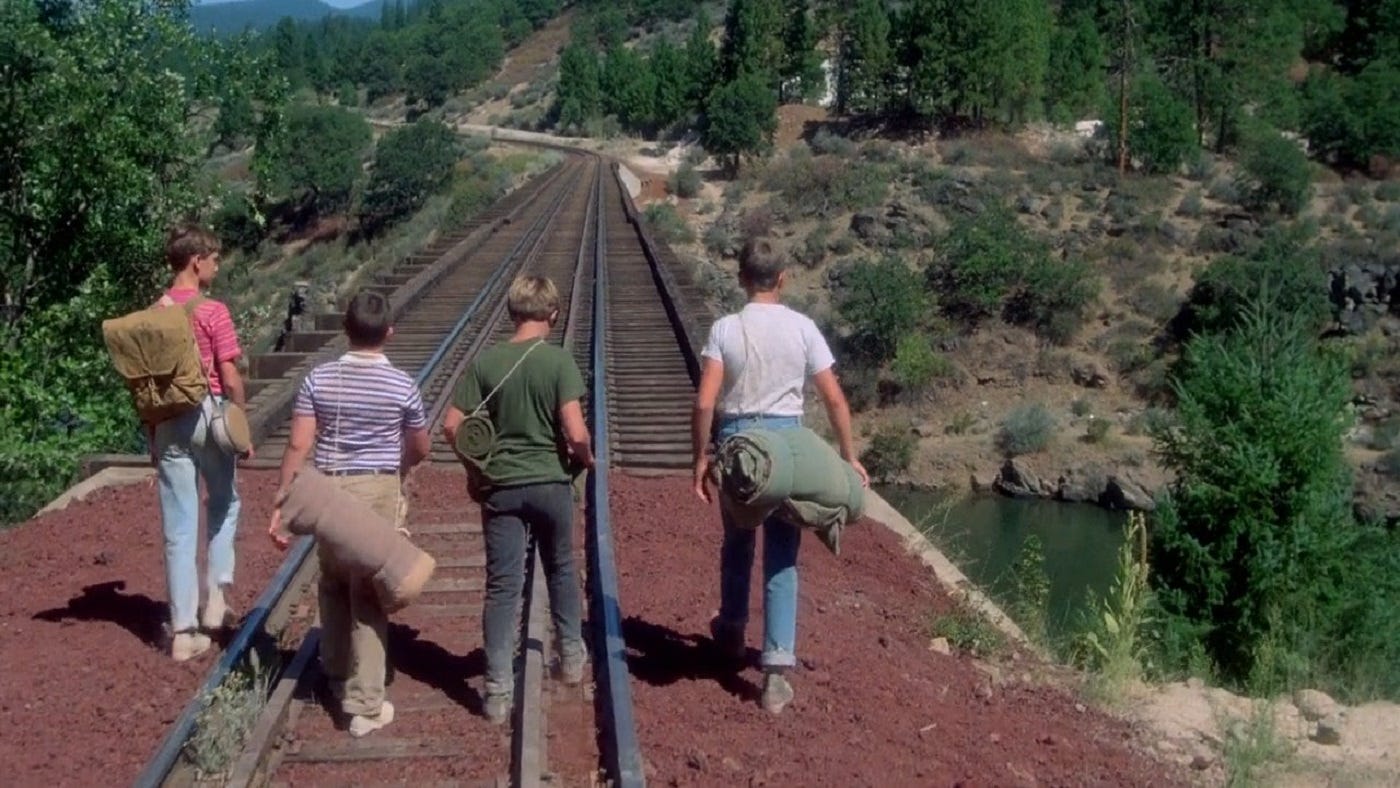
Cinematic and thematic tribute to Steven Spielberg (E.T., 1982), Rob Reiner (Stand By Me, 1986), and Stephen King (Cujo, 1981; It, 1986) was immediately apparent from the beginning. So was product placement. There were recurring close-up shots of cans of Coca-Cola, boxes of frozen Eggo waffles, and enough scenes involving Jif peanut butter to constitute full-length advertisements all on their own, but the framing was beautiful and relevant enough to building a rich world rooted in reality that I didn’t mind, even appreciated reminders of the brands I, too, consumed religiously as a child.
It also got very dark, very quickly.
Many read the Upside Down (a parallel dimension overrun by violent monsters and controlled by a demonic force) as an allegory for depression, a desolate version of reality that can isolate and overtake you, something your loved ones will crawl and claw through to save you from, if you can hold on long enough. Some have read it as a symbol of closeted homosexuality and urge viewers to understand the reality of what being openly gay meant in the ‘80s, thirty years before same-sex marriage was legalized in the US, and during the AIDS crisis which mainstream media largely avoided, heightening misinformation and prejudice. There are on-screen depictions of post-traumatic stress and panic attacks both in the Upside Down and in the real-world dimension that hit me so hard and unexpectedly I found myself physically unable to stop crying. For a series that has been compared to Harry Potter both in content and cultural impact (“a show that helped shape a generation”), its willingness to paint such a wide range of dark reality, at times raw and intimate, at times angry and violent, and so often painfully, heart-wrenchingly beautiful, struck me as particularly bold.
Stranger Things cast such an unprecedented spell on the world because it had cross-generational, multi-genre appeal. Teenagers saw themselves reflected on screen, perhaps pulled into a world of teenage heroes and alternate-dimension monsters the same way I once saw myself in Hermione Granger and held onto hope of receiving a late acceptance to Hogwarts (bureaucracy and paperwork, am I right?); the true-to-the-era aesthetics and costuming reminded other viewers of their youth; film and music buffs were treated to an abundance of references that made for a visually and sonically rich walk down memory lane; sci-fi and horror fans got the world-building, tension, and adrenaline they were looking for.
Like Harry Potter and Twilight, Stranger Things became a franchise and chose to invest in characters and themes that were popular with viewers. As with any media franchise, viewers had strong opinions, and there are many things I personally would have liked to see done differently on screen. I don’t say this to detract in any way from the strong storytelling, production, and talent behind these series. I grew up on Harry Potter and made some of my closest friends over shared love of a magical, otherworldly universe. Twilight launched the careers of some of my favorite actors and directors. The Stranger Things cast and team deserve recognition for raising a new generation of film and television aficionados and choosing to tell a controversial story in a complicated sociopolitical environment.
But to let cultural media fade away into nostalgia without studying what made them resonate with so many, without analyzing the ways they may have lost and misrepresented large subsets of viewers, and without pushing for more, is to give up on a battle we have barely started fighting.
One core tension defines most content in the modern entertainment industry: whether to write for mainstream appeal or to optimize for a cult following. David Harbour may have claimed the Stranger Things creators thought they “were going to make a beautiful show that like ten geeks [were] going to watch”, but nothing starring Winona Ryder could have realistically been pitched as an underground show. It was always meant to be big. And, just like any product, the bigger something gets, the harder it is to preserve the quality of being at the fringe, of the vulnerability and specific color of ego behind crafting a labor of love. When I think about what this tangibly means for creators and consumers, it comes back to the same growing concern I see in music, literature, and art: taste degradation accelerated by exponentially cheaper, faster, easier-to-find and access art at the world’s fingertips. The proliferation of streaming services and media exclusively funded by and released on an increasingly consolidated set of platforms forecasts a cloudier-than-ever future for less provably monetizable, “riskier” perspectives.
It’s shortsighted and self-limiting at this stage of global socioeconomic development to insist on the removal of artificial intelligence from the creative process. I commend Sundance Now’s commitment to “algorithm-free” streaming, presumably guaranteeing human curation of independent titles, but it’s a marketing tactic aimed at film connoisseurs and will not scale to match Netflix or Disney viewership. Any science fiction fan can attest to the thousands of different ways we’ve imagined artificial intelligence going wrong, becoming an enemy to society and human existence as we know it. Any horror fan knows that willful ignorance is often the first and most fatal flaw. Opting out of learning how to use these tools to our advantage is, in similar vein to opting out of consuming mainstream content because it fails to tell our stories accurately and respectfully, akin to splitting off from the group early into the horror movie to stumble into certain death.
I am not dismissing what is a very real, paralyzing fear of the unknown in the AI-assisted future of entertainment. We see it in every industry. The Pitt summarized it well in a recent episode. A new chief attending physician brings in a fresh suite of protocols including an AI medical transcription tool, which incorrectly records a diagnosis. A resident rolls her eyes: “AI”. The chief attending reminds the team that this AI tool is “98% accurate, but needs to be carefully checked”. Experts disagree on how and when to use AI in every field, which is why we need to keep using it as practitioners in every field, a sort of “guerrilla AI safety activism”. Entertainment may not be fundamentally urgent to human life in the same way medicine is, but it’s life-affirming and culture-defining in far less quantifiable ways.
A common information safety principle is to focus on open-sourcing and making information available and accessible to as many people as possible. The idea is that democratization, putting information into the hands of well-intentioned members of society, leads to best possible outcomes. Of course, there’s undeniable risk of bad actors in the system taking advantage of these distribution channels, propagating malicious information, harmful software, but that’s part of what conscientious activism should counteract, in a net-good world at least. When Anna’s Archive scraped the entirety of Spotify’s music library last year and declared intention to distribute it via torrents, I read the manifesto. I was struck by the thoughtful engineering, the technical prowess required to pull off such a feat, and I was surprised by the depth of the data analysis, too. It read like a music data nerd’s blog, analyses of listening habits, artist patterns across genres. Yes, by distributing Spotify’s catalog for free, Anna’s Archive was funneling away a source of income to creators. But the realist in me reasoned that this was already going to happen — we’ve been pirating movies and music long before Spotify — so why not centralize it in a secure, protected place, safer for the consumer?
Spotify sued Anna’s Archive and won, but the fight continues; if anything, this adds fuel to the fire.
As for representation in media, the Oscar nominations released today notably left out Eva Victor’s outstanding directorial debut Sorry, Baby (2025) and Korean auteur Park Chan-wook’s No Other Choice (2025). We have a long, uphill road ahead, but we also need to recognize that we live in an exceedingly violent, terrifying, and unpredictable world; it is a privilege we should not take for granted to be able to keep fighting to see our stories played out on screen, our voices heard around the world.
I love movies for many of the same reasons I love music. A child might watch The Matrix with her father and completely not understand it, but she might note that it was an important film to him, return to it years later to discover something about herself and rediscover something about him at the same time. An adult cleaning out her mother’s attic might find a dusty record collection and have a chance to connect with her in ways she could not have imagined previously. Film and music, much like literature and visual art, are ways for us to understand ourselves, connect with others, communicate with our loved ones. They are ways for us to express complex emotions and share experiences that cannot be captured any other way. They are ways for us to be human together, to chase the infinite possibilities of the universe together.
Giving up on making and consuming these art forms critically, humbly, and honestly, refusing to learn how to play the cards we are dealt, would only be a disservice to ourselves.